B2B SAAS SEO AGENCY · 2 CLIENTS / MONTH

SEO is a logic puzzle. We solve it before you write a word.

Keywords, intent, pages, backend, links. In that order. Most B2B SaaS SEO agencies start with content volume. That is why 40 articles rank for nothing.

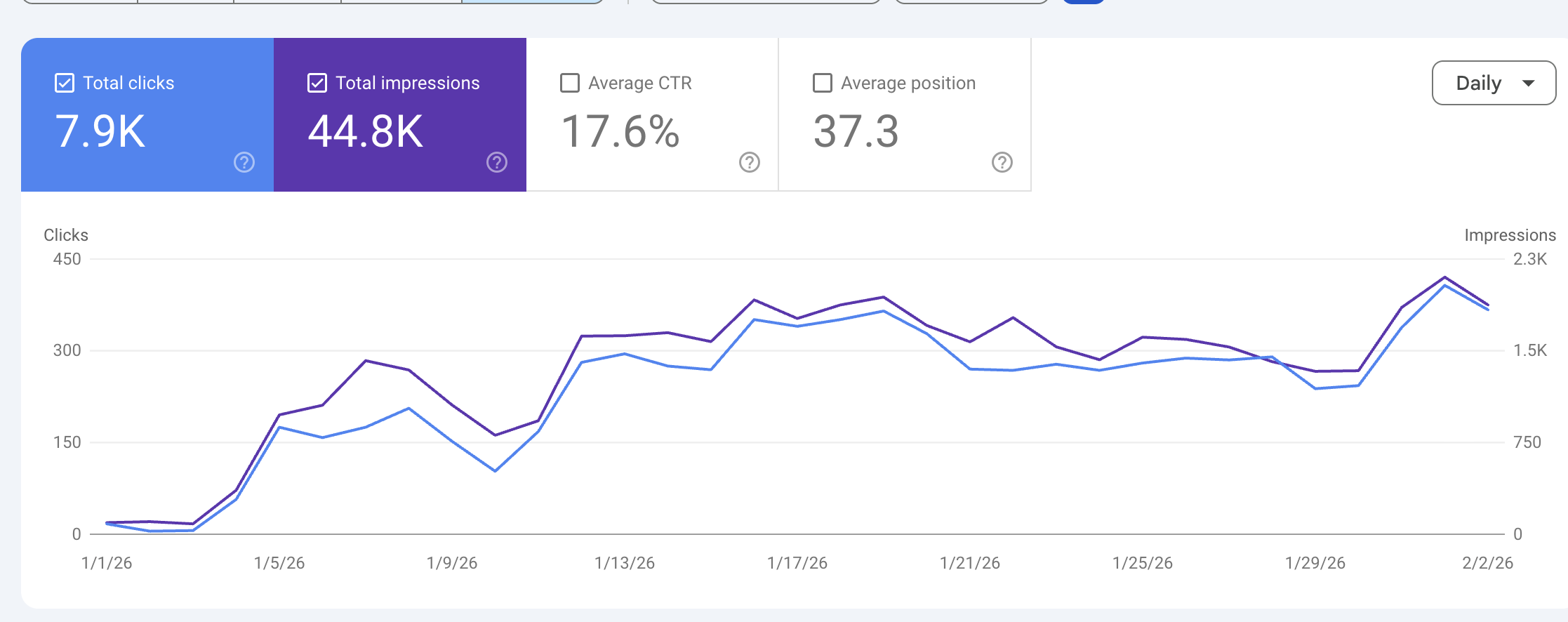
// fresh domain. 20 pages. zero backlinks. 7,900 clicks/month.

// architecture result. not content volume.

Keywords → intent
One page per intent
Technical implemented
Human-focused copy
↯ no blog-first SEO↯ no keyword cannibalization↯ no dark magic↯ no link farms↯ no content volume as strategy↯ no product descriptions↯ no dev-team handoff↯ no 'publish more and wait'↯ no stale keyword research↯ no blog-first SEO↯ no keyword cannibalization↯ no dark magic↯ no link farms↯ no content volume as strategy↯ no product descriptions↯ no dev-team handoff↯ no 'publish more and wait'↯ no stale keyword research
Head 06 / 06

B2B SaaS SEO: the head that compounds forever.

Every other head creates an asset that decays: copy rewrites, outbound lists exhaust, GEO citations need refreshing. SEO for SaaS done right compounds for years on its own. Longer than any content strategy or paid spend.

Hydra head representing SEO, architecture-first search engine optimization for B2B SaaS06Head 6 / 6 · logical puzzle

The wound

SEO

“You publish posts. Traffic flatlines. You blame the algorithm.”

The pain

Ranking feels like dark magic. It is not. It is an intent map, a page-per-intent, and a backend that loads fast. Most founders skip the logic and go straight to content volume.

The cut

Keywords, intent buckets, one page per intent, clean backend, relevant backlinks. Boring. Effective. Compounds for years. Works even better when positioning is sharp.

Do you have an SEO problem?

01

You have 40 articles. None of them rank for anything useful.

02

Two pages compete for the same query. Both sit on page two.

03

Your service pages are buried. Your blog gets crawled last.

04

Core Web Vitals are red. It's been in the dev backlog for four months.

05

You published more content. Traffic flatlined. You blamed the algorithm.

06

An agency ran a 'link campaign.' Domain authority went up. Rankings stayed flat.

07

Google crawls 20% of your site. The rest gets treated as low-priority.

08

Your content reads like a product description. Readers skim and leave.

Three or more. Architecture problem. Fixable in two weeks.

Full keyword architectureIntent map per verticalURL structure blueprintCommercial + service pagesTechnical SEO implementationProgrammatic page templatesEditorial content briefsWeekly GSC/GA reporting
The logic

Five steps. Sequential. Always in this order.

Architecture exists before content starts. Content exists before authority scales. Skipping a step does not save time. It creates the problem you hired us to fix.

SEO architecture method
  1. 01

    Keywords

    find

    Find the terms people actually search for. Not what you think they search for. What they type. Industry-specific, intent-specific, volume-verified. This is the raw material. Nothing ships without it.

  2. 02

    Intent

    segment

    Segment every keyword by why someone is searching. Informational, commercial, navigational, transactional. People searching the same topic for different reasons need different pages. Most sites collapse this into one. That's why they rank for nothing.

  3. 03

    Architecture

    structure

    One page per intent. No overlap, no cannibalization. URL structure decided before any content starts. Service pages, commercial pages, comparison pages first. The blog supports them. It never leads.

  4. 04

    Backend

    implement

    Crawlability, Core Web Vitals, canonical logic, schema, internal linking. Implemented directly. Not a ticket to a dev team. This is the part most SaaS SEO agencies can't do and most dev teams don't know they need.

  5. 05

    Links

    authority

    Vertical-specific editorial placements. Relevant, manual, topical. Not a link farm, not a PBN. Authority that actually transfers. This is the last step because everything above has to exist first for links to matter.

Keyword architectureIntent segmentationOne page per intentTechnical implementationCommercial pages firstProgrammatic scaleEditorial contentRelevant backlinksKeyword architectureIntent segmentationOne page per intentTechnical implementationCommercial pages firstProgrammatic scaleEditorial contentRelevant backlinks
PROOF.md

Fresh domain. 20 pages. Zero backlinks.

7,900 organic clicks/month. That is an architecture result, not a content-volume result.

7,900
/mo
Organic clicks
Site 1. January. Fresh domain, zero backlinks.
20
pages
Total pages built
No content farm. Twenty strategic landing pages. Architecture, not volume.
0
backlinks
External links used
Zero paid traffic. Zero links. Structure did the work.
Google Search Console screenshot: 7,900 clicks and 44,800 impressions from a brand-new domain with zero backlinks

Site 1 · 7,900 clicks · 44,800 impressions · fresh domain · 0 backlinks

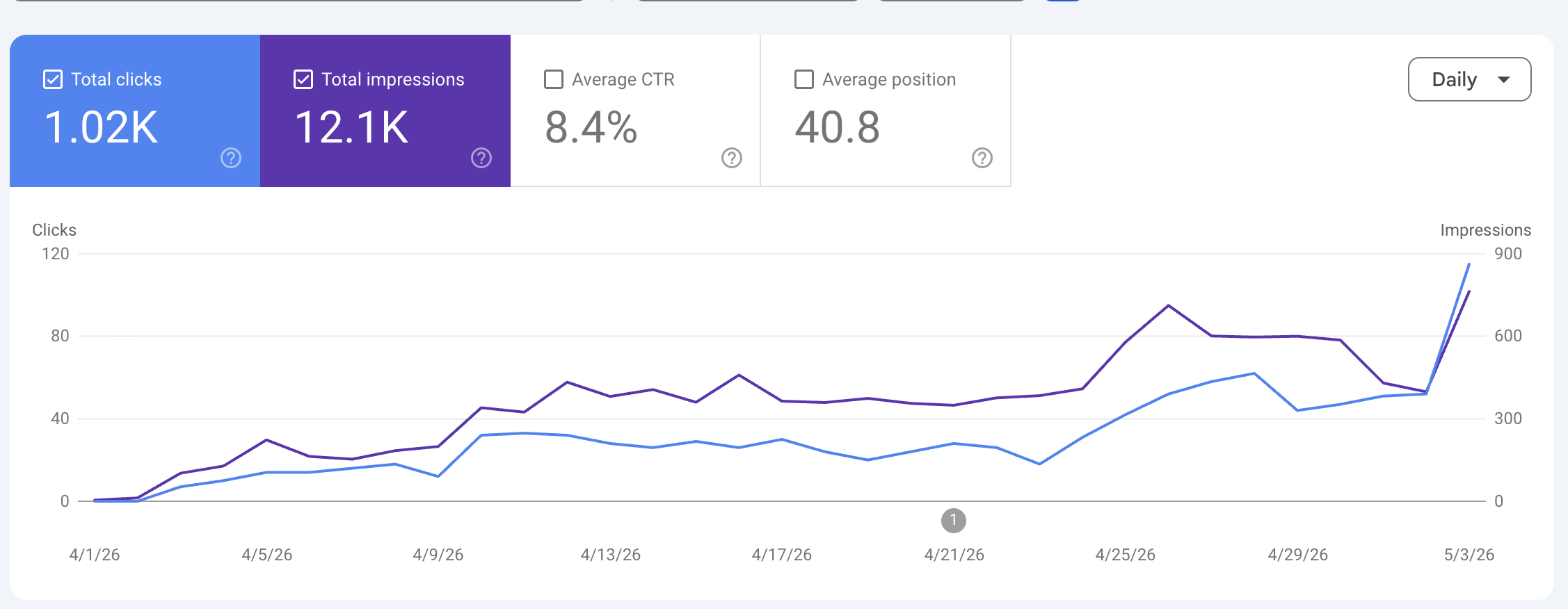
Google Search Console screenshot: 1,000 clicks and 12,000 impressions from a brand-new domain with zero backlinks

Site 2 · 1,000 clicks · 12,000 impressions · fresh domain · 0 backlinks

Google Search Console · Both sites started from 0 · No paid traffic · No backlinks · Click to enlarge

MANIFESTO.txt
$ cat why_seo_fails.md

SEO isn't dark magic.

It just gets treated like it is.

The algorithm is not your enemy. Your architecture is the problem.

Your buyer reads five words and decides if they're in the right place. Give them a product description, and they leave. Give them their daily pain named in the first line, and they read everything.

What we believe.
  • Blog-first SEOArchitecture first, blog supports it
  • Content volume as strategyOne page per intent, no overlap
  • SEO that feels like dark magicSEO that's just a logic puzzle
  • Generic product descriptionsCopy humans can find themselves in
  • Keyword cannibalization ignoredEvery keyword mapped to one page
  • Link campaigns with no topical depthVertical-specific placements that transfer authority
// TL;DR: B2B SaaS SEO is not a content problem. It is an architecture problem, a technical problem, and a copy problem. All three exist before a single page ranks. Our B2B SaaS SEO agency covers all three in the same sprint, by the same team, without a handoff.
the-model.txt
HuntingHydra
// how it works

Architecture, copy, and code. Same sprint.

Strategy, technical implementation, and content happen in one sprint. No handoff. No ticket queue. No agency black box.

The stack
AhrefsGoogle Search ConsoleScreaming FrogTypeScriptNext.jsCursorClaude + GPTFigmaGA4Statsig
WHY_IT_WORKS.md

Strategy, code, and copy.
Same brain. Same week.

  • 01Two founders who both touch the work: strategy, implementation, and content in one sprint. A B2B SaaS SEO agency built for growth-stage founders, not the enterprise retainer model.
  • 02No ticket to a dev team. Technical SEO gets implemented directly, not delegated.
  • 03Architecture exists before content starts. Content exists before authority scales.
  • 04Every piece of content is written with positioning in mind: human-focused, not product-description focused.
  • 05Weekly GSC and GA reports, direct data access. No proprietary dashboard between you and reality.
PRICING.json

Architecture sprint. Fixed.

Two weeks. Fixed scope. Architecture and first commercial pages live by the end of sprint.

SINGLE SPRINTSEO audit + architecture
$5k
/ sprint, all-in

Keyword map, intent architecture, URL structure, and technical audit. The foundation any team can build on.

Start the hunt →
MOST HUNTEDSEO + Positioning
$10k
/ sprint, all-in

Positioning fixed first so SEO targets the right intent. Then the architecture gets built on top. Copy and structure aligned from day one.

Start the hunt →
FULL CUTFull studio
$18k
/ sprint, all-in

Every head on the table. Positioning, SEO architecture, GEO/AEO, GTM, and UX teardown. One two-week sprint.

Start the hunt →
// ADD-ONS
SEO retainer
// monthly re-baseline, content briefs, link outreach, GSC/GA reporting
$1.5k–$3k / mo
GEO / AEO retainer
// LLM citations: what SEO is becoming
$1.5k–$4k / mo
FAQ.txt

Questions before you summon.

Because publishing more content on a broken structure compounds the problem. Fifty articles with no intent mapping means fifty pages competing against each other. Sort the structure first, then fill it.

Cannibalization is when two of your own pages compete for the same query. Google picks one, deprioritizes the other, and neither ranks as well as a single focused page would. It's the most common SEO problem we see.

Volume is a multiplier. Multiply a good architecture by volume: good results. Multiply a broken structure by volume: you're just publishing more pages that rank for nothing. Architecture first.

Both. Content briefs written by us, content reviewed and approved before publish. Every piece is human-focused: names the daily pain, not the product description. We don't publish AI slop.

They share the same foundation: a clear angle for a specific ICP. Wrong positioning means you rank for the wrong queries. Weak SEO architecture means LLMs don't trust your content enough to cite it. Fix positioning first, then SEO and GEO compound on top.

We don't write a document and hand it to your dev team. We push the changes. URL structure, canonicals, schema, Core Web Vitals fixes. If it needs code, we write the code.

Two weeks for the architecture sprint: keyword map, intent segmentation, URL structure, technical implementation, first commercial pages live. SEO compounds from that foundation. The retainer is for monthly compounding.

Both, but they are not the same thing. A B2B SaaS marketing agency that does everything usually does SEO badly because SEO is treated as one channel among many. We treat it as the foundation. Positioning, SEO architecture, and GEO all share the same keyword logic. When that foundation is right, the rest of your marketing compounds on it.

Send an email. You'll know in three sentences.

SUMMON_HUNTER.exe

Start the hunt.

Pick the head. Describe the wound. One email back tells you if this is the right fit.

Which head? (pick all that apply)

Try it yourself first

The SEO methodology — as AI prompts.

Same frameworks we use in every sprint. Use them with Claude, ChatGPT, or Gemini. $29/month unlocks all of them.

After the sprint

The architecture is set. It compounds from here.

Good SEO architecture doesn't decay. Positioning fades if not reinforced. Outbound lists exhaust. SEO built right keeps paying out for years.

Six-headed hydra sleeping peacefully after the SEO sprint