HuntingHydra
AI for agencies

AI for agencies.
One canvas per client, from brief to launch.

Every account gets its own canvas. The brief becomes pages in an hour, the client leaves notes on the plan, and the build ships exactly what they signed off.
Three days free. Then from $20 a month.
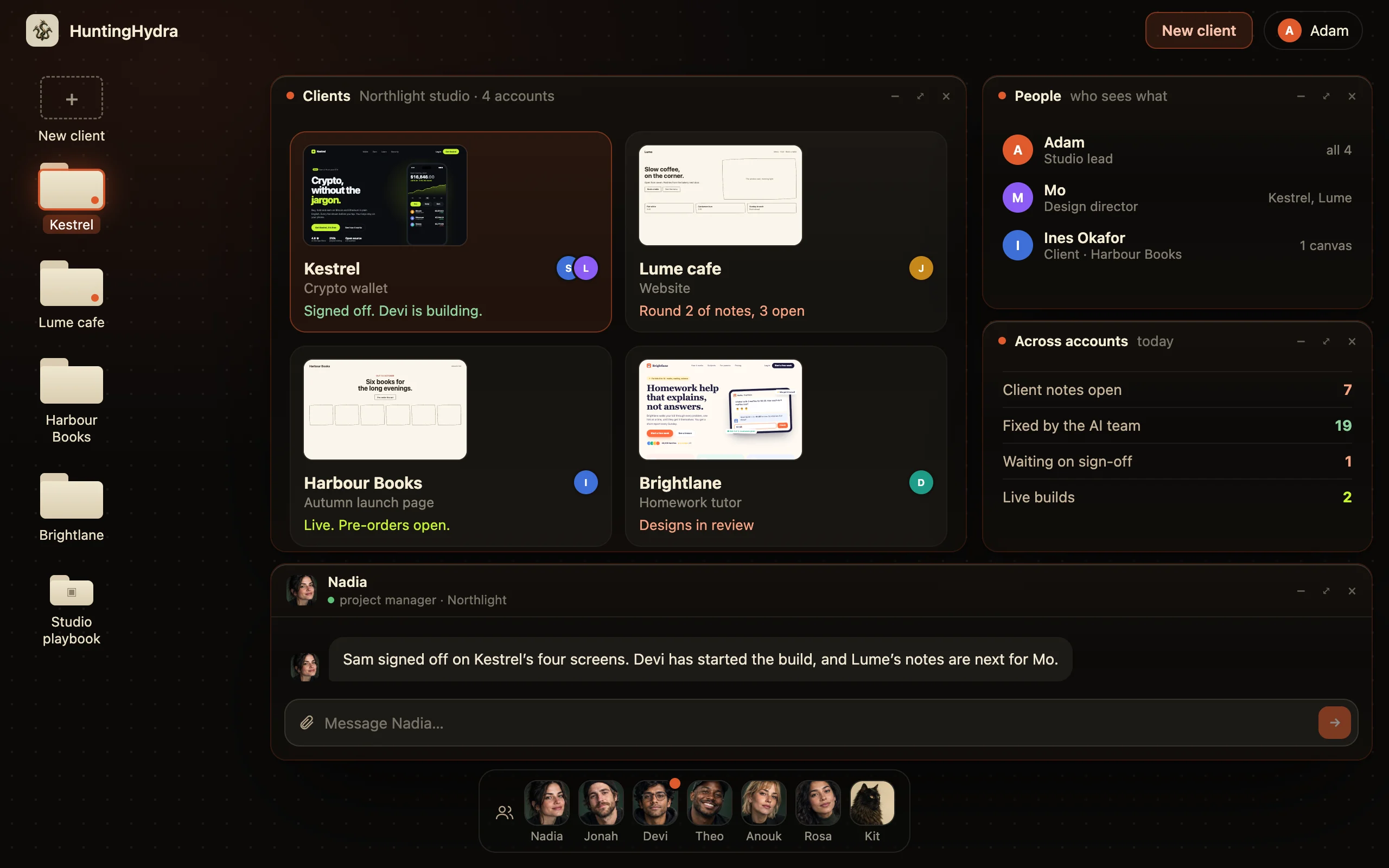
A studio’s desktop with a canvas per client, who sees what, and the day across accounts
Every page first
Sketched before anything is built
Your edits
Always free
Front to back
Database, logins, a live address
Your code
In your GitHub
The old way

The deck, the Figma, the dev shop, the thread.

Four places the same decision gets made differently.
  1. YouScope it in a deck
  2. WaitThe client signs
  3. YouWireframe it in Figma
  4. WaitComments, by email
  5. YouBrief the dev shop
  6. WaitThe build, then the change requests
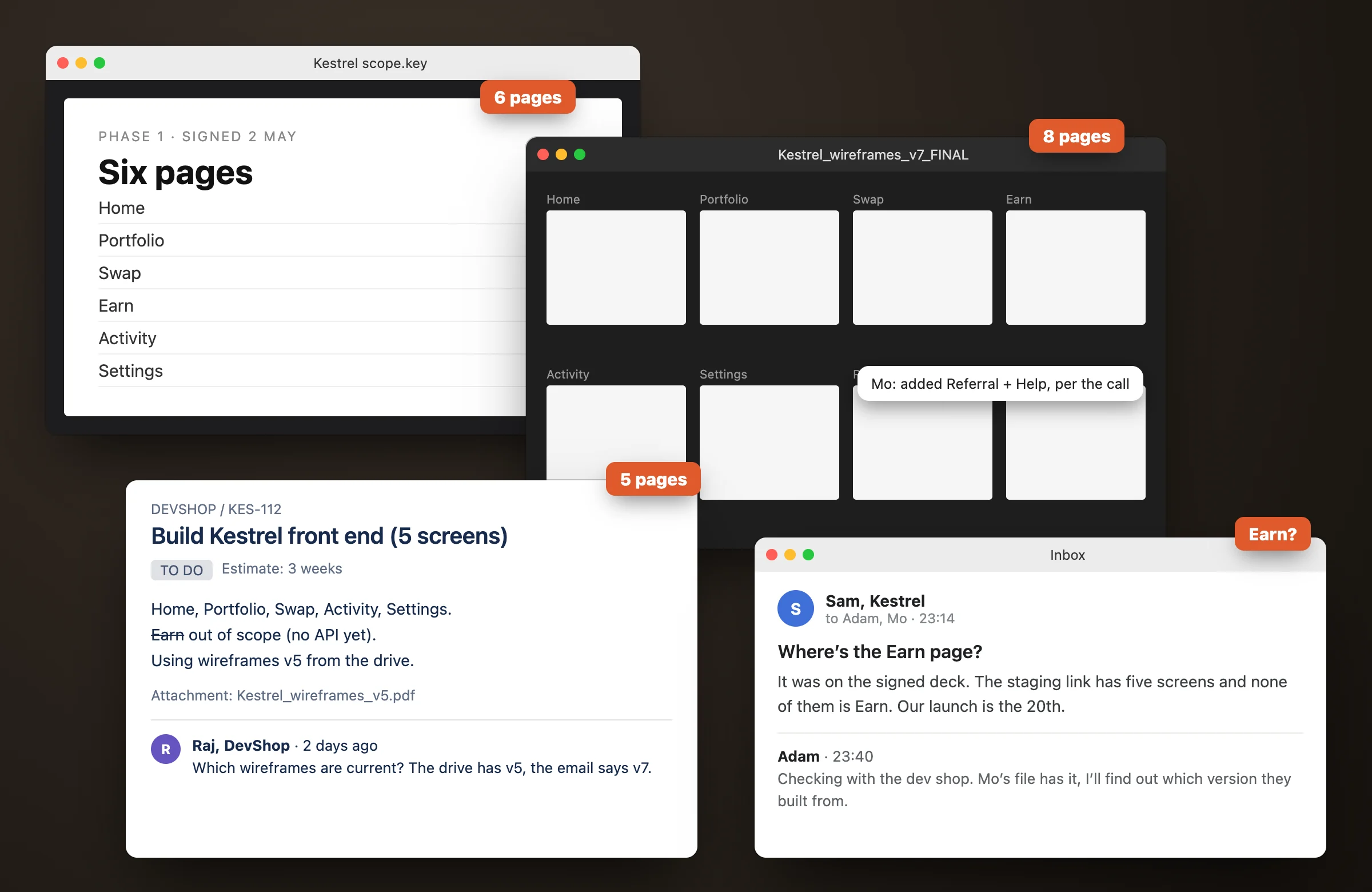
One scope decided four ways: a signed deck with six pages, a wireframe file with eight, a dev shop ticket with five, and the client asking where a page went
“Every hand-off is a translation, and every translation is billed twice.”

The best AI tool for agencies replaces the hand-offs between the deck, the Figma file, the dev shop and the email thread. HuntingHydra gives every client a canvas where the scope is drawn as pages, the client leaves notes in place, and AI employees design, write and build exactly what was approved. Your people direct.

Client notes land on the page, not in an email.

The client sticks a note on the part they mean. Only that part changes, and the scope stays exactly as signed.
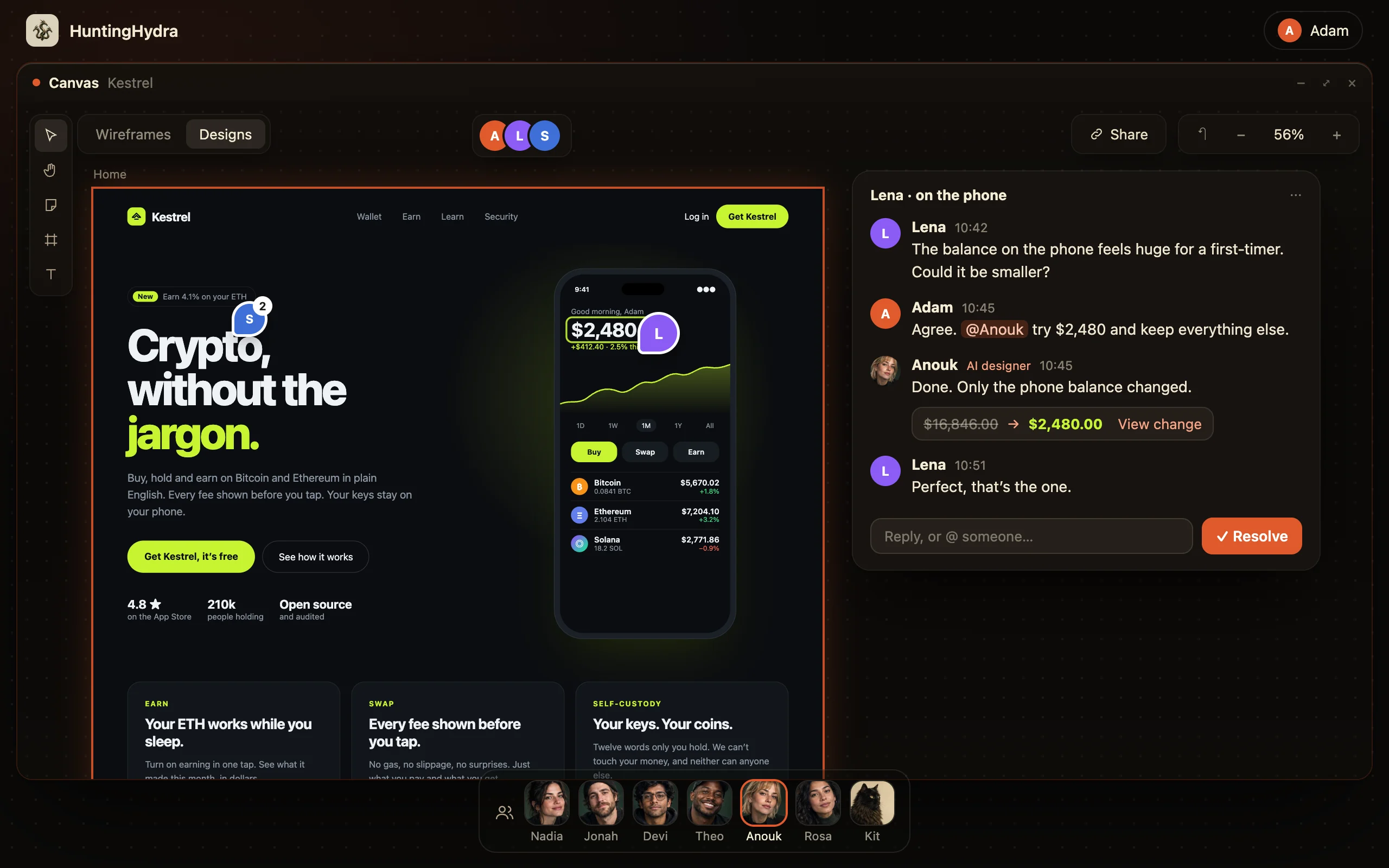
A client’s note on the Kestrel phone balance, fixed inside the thread with nothing else moved

One canvas per client. One place the truth lives.

Scope, design, copy and build, on the surface the client can see.
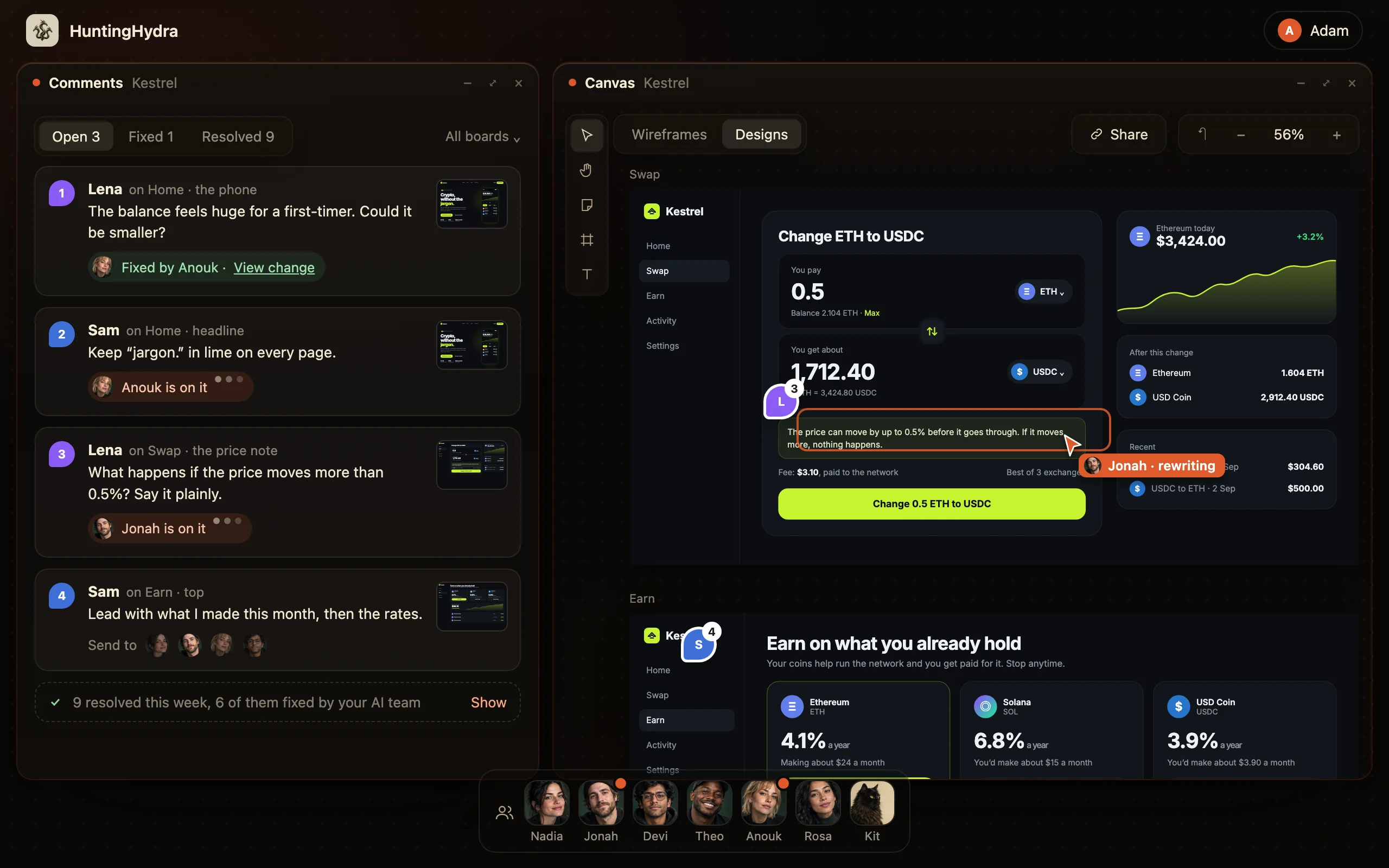
The client, on it. Notes on the pages, and what was done with them.
Every comment on Kestrel in one list, each sent to the AI employee who fixes it
The build. Per client, per canvas, to a live URL.
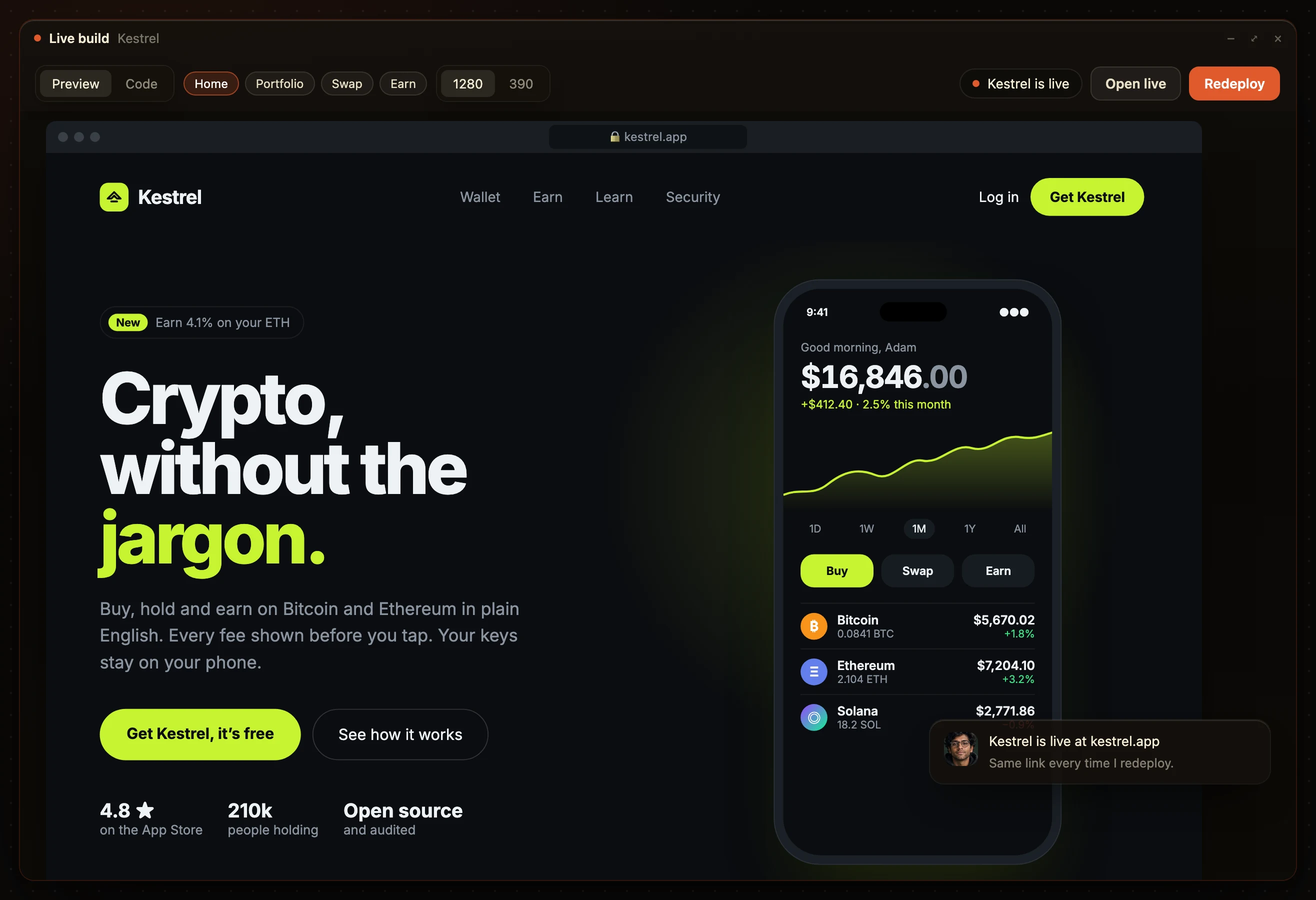
The live build window: Kestrel’s portfolio page online at its own address

Your standards, on every account.

Your brand rules and best practices carry into every new canvas, so each client starts from your standard, not from zero.
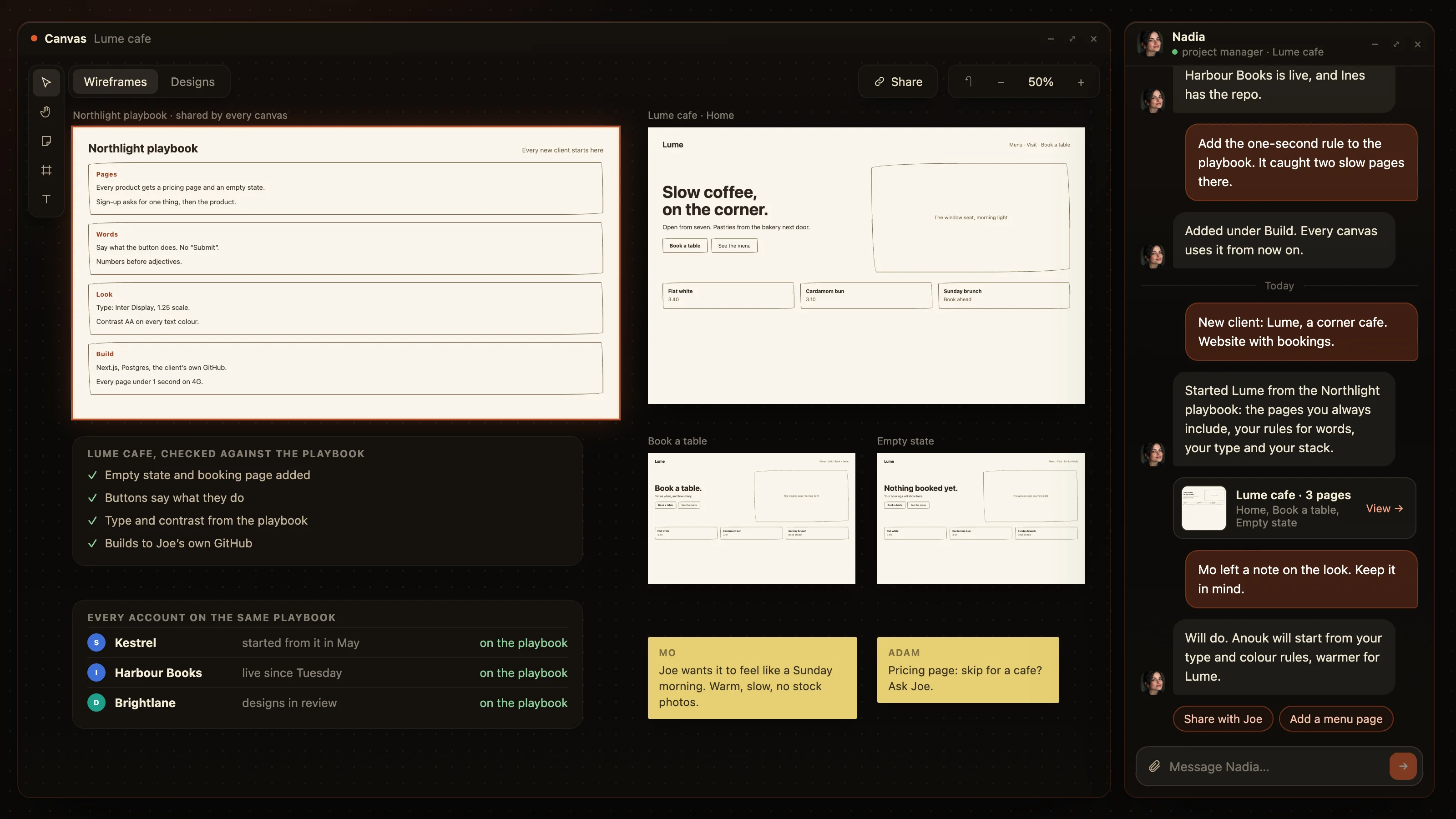
The studio playbook on the canvas starting a new client, with the new pages checked against it

What you get as an agency.

A whole team of AI employees per account. Your people direct all of it.
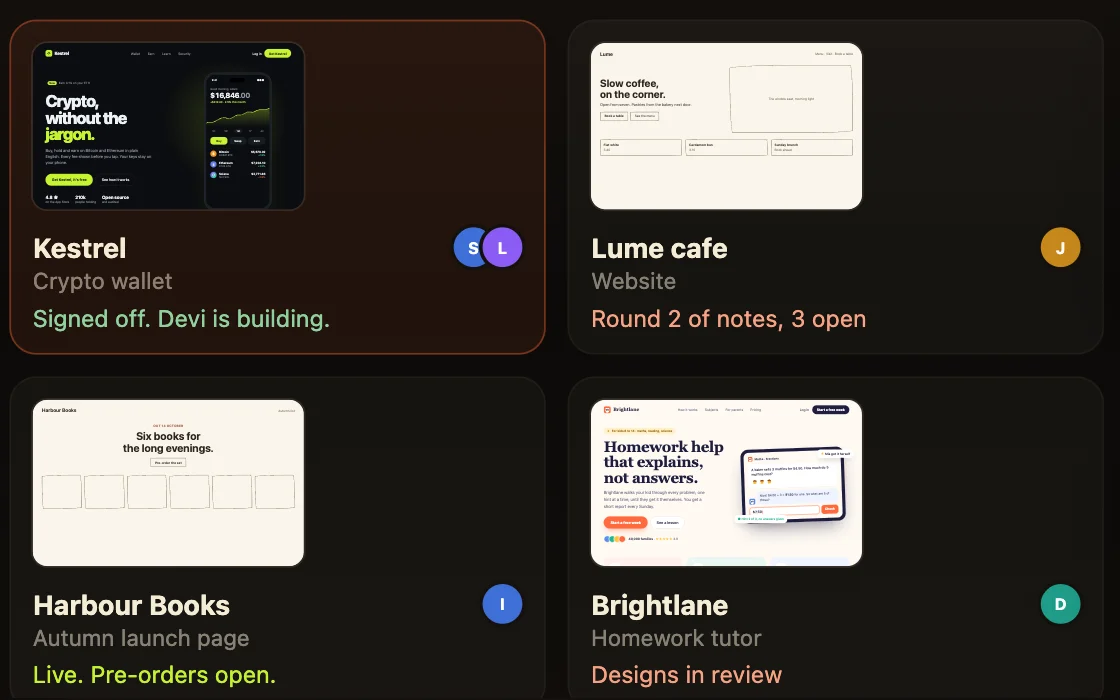
Client canvases on a studio desktop

A canvas per client

Scope, design, copy and build in one place.
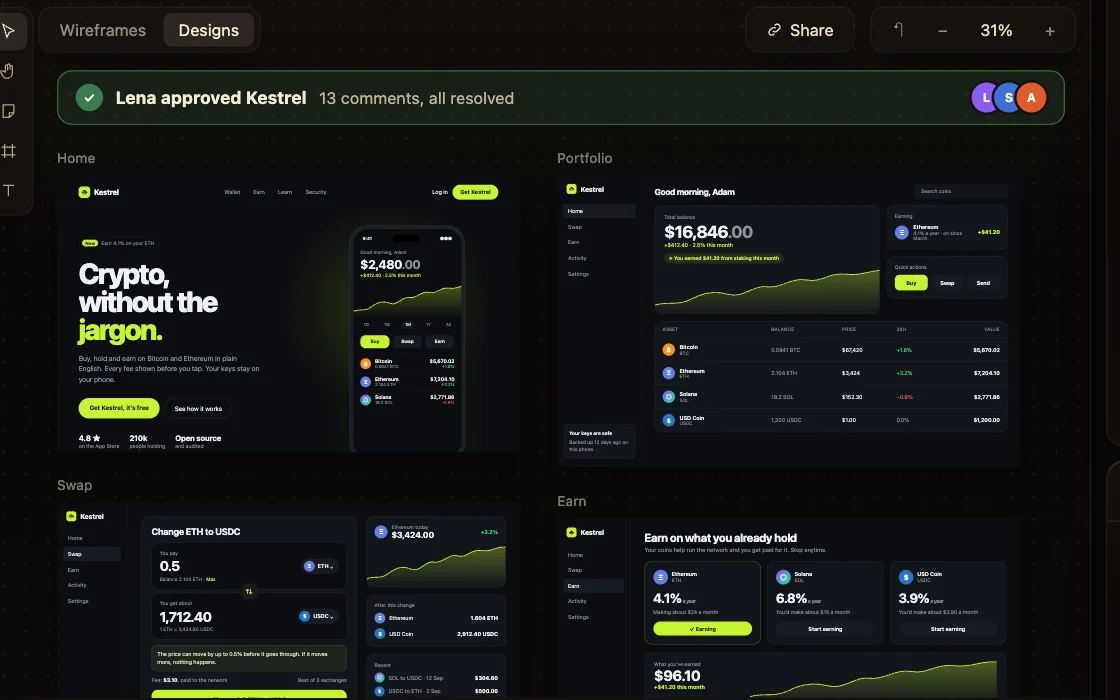
The client approved every page, with all comments resolved

Scope that can’t drift

It’s drawn, and the client signed the drawing.
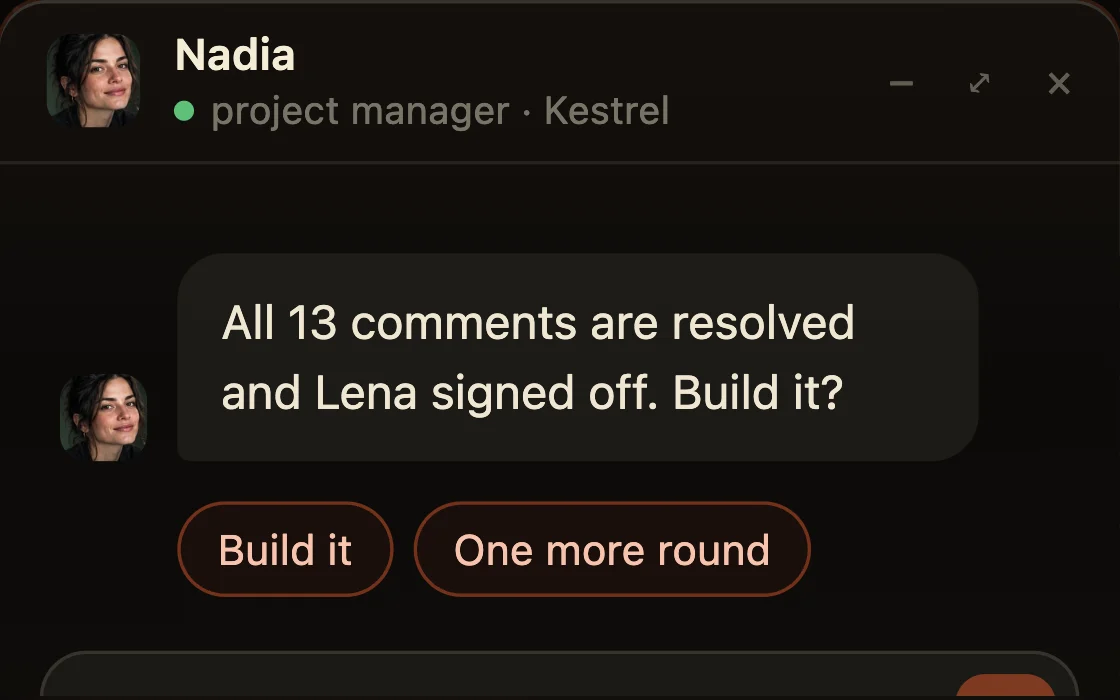
Nadia asking whether to build after sign-off

Sign-off before the build

No change requests after launch day.

A new client’s pages started from the studio playbook

Websites, landing pages and apps

Every kind of client work on one system.
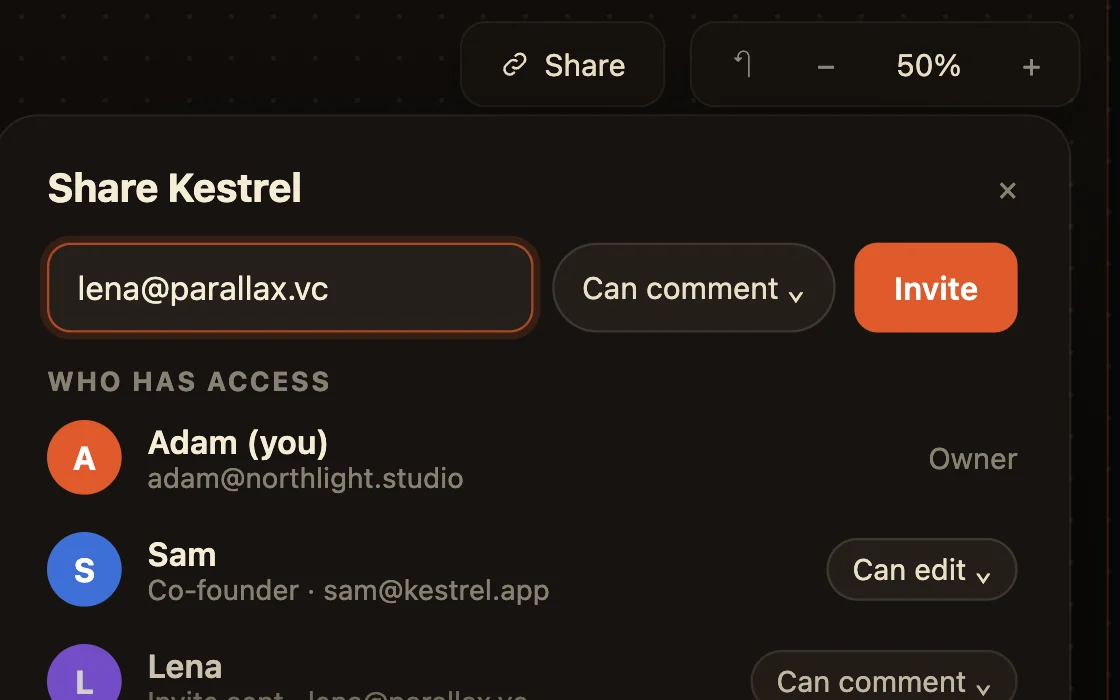
Sharing a canvas with the team and the client

Your team and clients on one link

Notes in place instead of email threads.
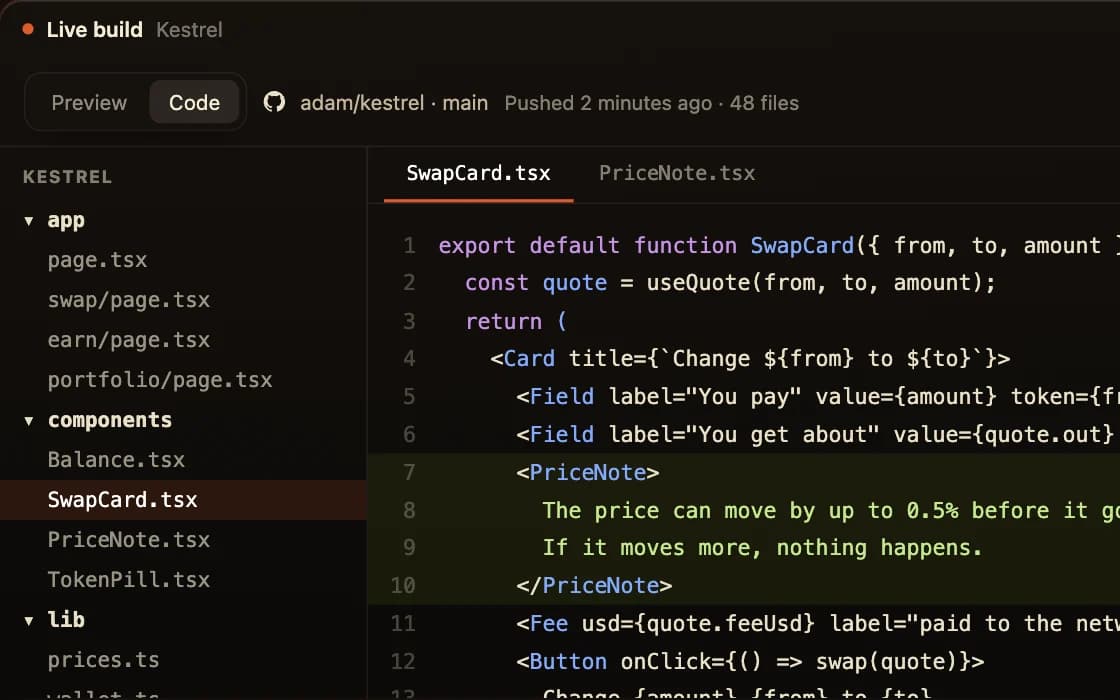
The client’s code in their own GitHub

Code the client owns

Hand over a repo and a live URL.

Nadia
project manager

Nadia

Lays out every page of your product, and keeps them current.

  • Turns the first prompt into a canvas of boards
  • Keeps the plan current as you change your mind
  • Draws the data behind the pages before anyone builds it
On every project
Jonah
copywriter

Jonah

Rewrites every line so a person could have written it.

  • Rewrites every board on your canvas
  • Fixes the templated lines
  • Writes straight into the canvas, not into a doc
Devi
builder

Devi

Builds what you approved, then owns it.

  • Builds every board on the canvas, in the material Anouk set
  • Deploys it and hands you the real URL
  • Fixes what breaks after it is live
On every project
Theo
go to market

Theo

Picks one launch channel and writes the assets.

  • Picks the channel that fits what you built
  • Adds the launch assets to your canvas
  • Says no to the channels that will waste your week
Anouk
designer

Anouk

Three looks to pick from, then the rest in the one you chose.

  • Puts three directions on one board, same page, three materials
  • Draws every board for real in the one you choose
  • Leaves the wireframe layer underneath, on a toggle
Rosa
growth

Rosa

Adds the pages people search for, and the mail that brings them back.

  • Adds the search pages worth owning to your canvas
  • Draws the nudge, the empty state, the mail that brings them back
  • Hands the wording to Jonah so it still sounds like you
Kit
automation

Kit

Wires the step you keep doing by hand.

  • Finds the step you keep repeating and takes it off you
  • One automation at a time, never a catalogue
  • Always draws what you see once it has run

Keep every account growing.

AI marketers bring launch, search and email ideas, and the good ones go straight back onto the canvas to be built.
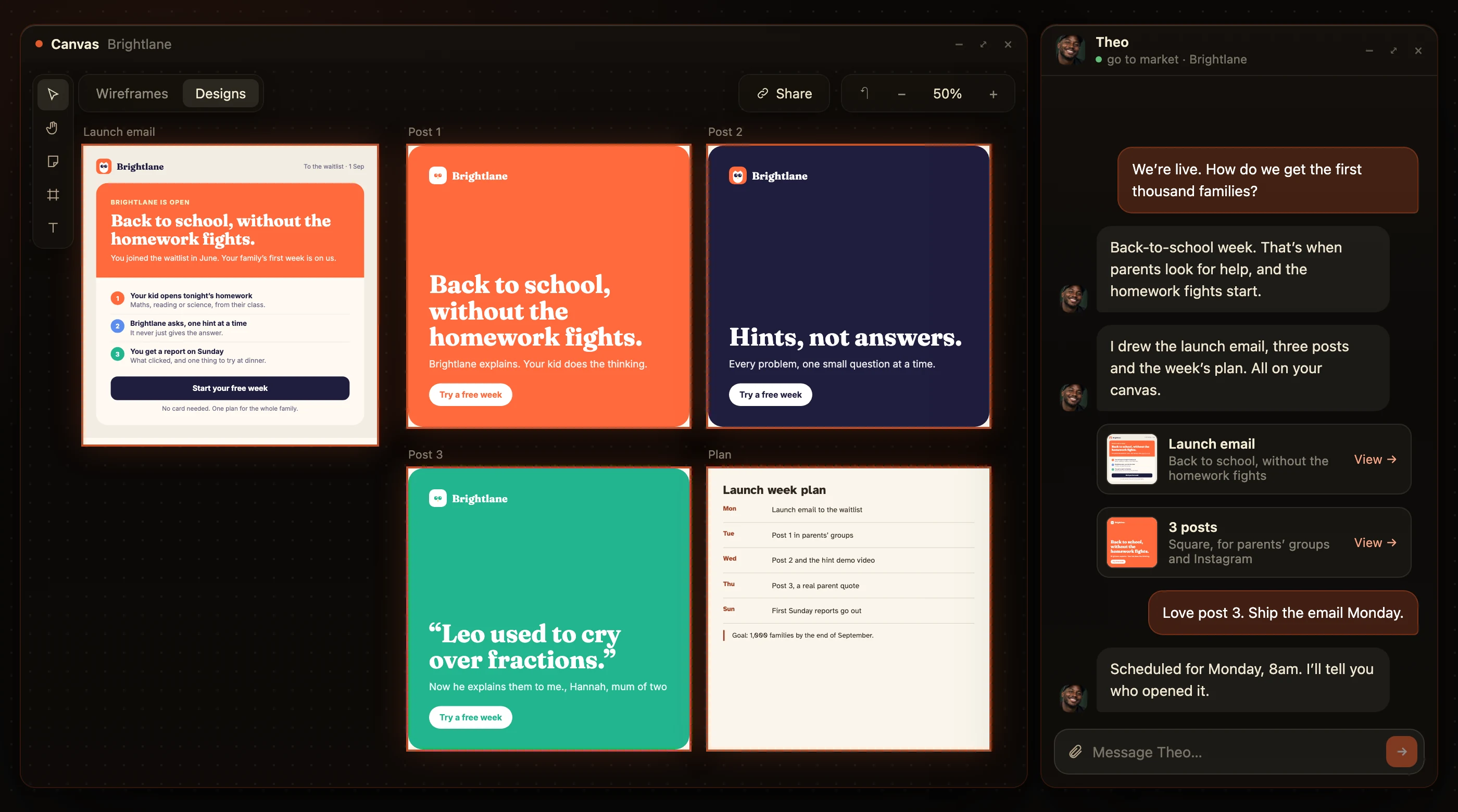
Theo’s launch kit for Kestrel: the launch email, four posts and the week’s plan

AI for agencies: common questions.

What is the best AI tool for agencies?

One that gives each client a single place for scope, design, copy and build. HuntingHydra draws the scope as pages the client can see and builds exactly what they sign off.

Can clients see the canvas?

Yes. Send the link; clients read the pages and leave notes in place.

Can my whole team work on it?

Yes. Your team works on the same canvas as the AI employees and the client.

Do we keep the code?

Yes. Every build is in a GitHub repo you control, ready to hand to the client.

Can we build websites and landing pages, not just apps?

Yes. Sites, landing pages and apps are built the same way.

What does it cost?

From $20 a month per canvas on the model you already pay for, three days free.